Sixty-Four Cores for the Price of Lunch: A Sober Guide to the Used Server Market
Walk through any enthusiast forum and you will eventually trip over the same post: someone has discovered that a dual-socket board and a 32-core Xeon, parts that cost five figures a few years ago, now sell for less than a midrange graphics card. The reaction is predictable — half the commenters congratulate the buyer, the other half warn about power bills, noise, and a platform that may never boot a mainstream OS without coaxing.
Both camps are partly right. Used enterprise hardware represents some of the most compute per dollar ever offered to hobbyists, but it punishes casual assumptions in ways desktop parts never will. Before clicking buy on that 64-core EPYC, it pays to understand exactly what you are getting into.
Why the Bargain Exists at All
Data centers operate on refresh cycles measured in three to five years, driven less by raw performance than by electricity, density, and warranty support. When a hyperscaler rotates out a generation of servers, thousands of identical machines hit the secondary market simultaneously. Supply vastly outstrips enthusiast demand, and prices collapse accordingly.
The result is a persistent arbitrage: first-generation EPYC 7000-series chips and Cascade Lake Xeons trade hands at prices that seem like typographical errors. A dual-socket X99-class board with 128GB of registered ECC can cost less than a single consumer motherboard. Nothing else in computing depreciates this aggressively.
What Translates to a Home Rack
Not every enterprise feature is relevant outside the data center, but several genuinely benefit a homelab.
Memory capacity and reliability. Registered ECC DIMMs remain the headline attraction. Virtualization hosts, ZFS storage servers, and compile farms all benefit from both the capacity ceiling and the error correction. A desktop platform maxing out at 128GB of unbuffered memory competes against server platforms offering a terabyte for comparable money.
Core counts that desktop chips still cannot match at the price. Even a first-generation EPYC with modest per-core performance will out-thread any consumer part at the same outlay, which matters for container workloads, distributed builds, and VM hosts.
IPMI. The out-of-band management controller — whether you call it iDRAC, iLO, or BMC — is quietly the best feature of the whole platform. Serial console, remote power control, and virtual media over the network transform how you maintain a headless machine in a basement or closet.
What Does Not Translate
The honest accounting requires the other column too.
Idle power draw. Server platforms are tuned for sustained load, not the desktop pattern of brief activity followed by long idle. Dual-socket systems with a dozen DIMMs populated routinely idle at 150 watts or more. Over a year of 24/7 operation at US residential electricity rates, that overhead can exceed the hardware's purchase price — the single most underweighted cost in every used-server purchase.
Clock speed. Server cores trade frequency for density. A 2.0 GHz Xeon Scalable core is substantially slower than a modern desktop core at 5 GHz, and single-threaded applications — most desktop software, most games — will feel it immediately.
Noise and physicality. Rack chassis are engineered to move air at screaming velocities. A 2U server in a home office is a lifestyle decision, and usually a bad one.
Platform quirks. Boot times measured in minutes, BIOS interfaces designed for fleet administrators, and occasional driver gaps for consumer operating systems are all part of the package.
A Buyer's Framework
For enthusiasts weighing the plunge, a few principles separate satisfying builds from regrets.
Match the platform to the workload, not the core count. A storage server or virtualization host justifies ECC, density, and IPMI. A gaming or general-purpose desktop does not, at any price.
Budget for electricity before hardware. Estimate idle draw honestly, multiply by your kilowatt-hour rate, and let that number influence whether a dual-socket monster or a single-socket board is the right call.
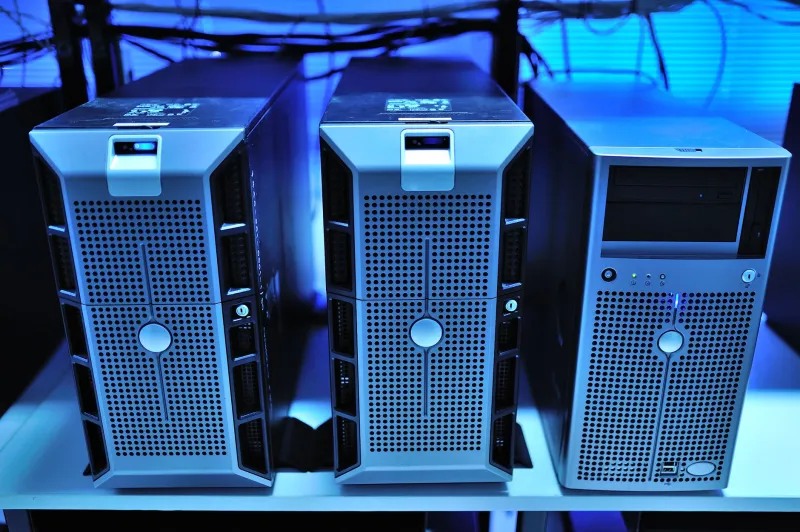
Verify platform support before purchase. Check that your chosen board's BMC is firmware-supported, that the CPU generation and memory configuration are validated, and that community documentation exists. Obscure OEM boards from Dell or HP towers can be excellent values, but only when someone else has already mapped the rough edges.
Buy memory and CPU together, matched. Registered ECC memory is picky about population rules, and generation-mismatched DIMMs are the most common source of no-post frustration in this space.
Prefer single-socket for first builds. NUMA complexity, doubled idle power, and scarce cheap boards make dual-socket systems an advanced purchase, not a starter one.
The Bottom Line
The used server market is not a desktop replacement and never will be. It is, however, the cheapest path to serious memory capacity, meaningful core counts, and genuinely enterprise-grade reliability that most enthusiasts will ever encounter. Approach it as a distinct platform with its own economics — budget for the power bill, respect the noise, and buy for the workload — and the bargain is very real. Approach it as a cheap gaming PC, and the commenters issuing warnings were right all along.