One Core, One Million Cycles: Why Emulation Is the Toughest Single-Thread Benchmark You're Not Running
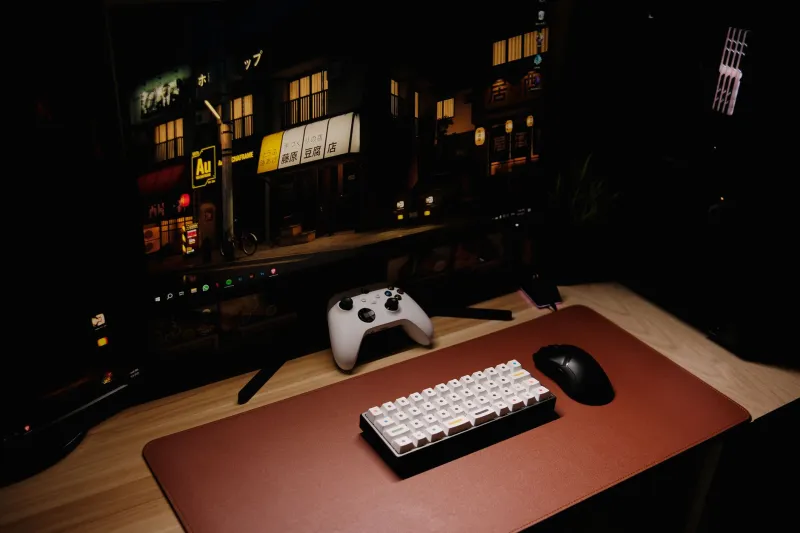
There is a particular kind of silence that follows a failed emulation session. The game froze mid-jump, audio stuttered into a warbling drone, and no amount of frames-per-second headroom in your GPU monitoring overlay explains why. Modern 3D titles run flawlessly at 4K, yet a game from 1997 just brought your machine to its knees.
This is not a paradox. It is a lesson in computer architecture that most benchmark suites never teach, and it is one of the more honest ways to evaluate a budget CPU in 2024.
Why a 30-Year-Old Console Punishes a 16-Core Processor
Console emulation at the high end — cycle-accurate emulation, the kind projects like Ares pursue — does not scale across cores the way rendering or video encoding does. The emulated machine is a chain of dependent events: the CPU executes, the result feeds the coprocessor, the coprocessor's output reaches the video encoder, and the audio buffer drains on a fixed schedule. If any link in that chain arrives late, the host thread stalls, and the stall is audible.
Ares, which aims for accuracy across a long roster of systems including the Nintendo 64, spends enormous effort reproducing hardware behaviors that the original silicon handled in parallel. On a host PC, much of that work collapses onto a single thread of execution. simple64, a focused N64 emulator built around a dynamic recompiler, is more forgiving than a pure interpreter but still leans heavily on one core's ability to retire instructions quickly.
The result is a workload where a 16-core chip with mediocre per-core performance can lose to a 6-core chip with excellent IPC. Cache latency, branch prediction quality, and sustained clock behavior under light load — characteristics that rarely show up on a retail box — dominate the outcome.
The Gauntlet
For this exercise, we treat three scenarios as a pass/fail ladder rather than a benchmark chart with decimal places:
- Tier 1 — High-Level Emulation (RetroArch cores): Comfortable on nearly anything sold in the last decade. This tier exists only to establish a floor.
- Tier 2 — LLE-leaning N64 work (simple64): Requires strong single-thread throughput and low memory latency. Entry-level chips begin to separate here.
- Tier 3 — Cycle-accurate ambitions (Ares): The wall. Only the strongest per-core performers in the budget bracket keep audio clean and timing consistent.
Ranking the Budget Field
1. AMD Ryzen 5 7600. Six cores of Zen 4 at a mainstream price point. The combination of high IPC, a large L3 cache, and low-latency DDR5 access makes it the clear winner of the gauntlet. It holds Tier 3 with headroom, and its single-thread performance is the closest thing the budget market offers to a guarantee against emulation stalls.
2. Intel Core i5-12400. The value pick that refuses to retire. Golden Cove-derived performance cores give it IPC that still embarrasses newer budget parts, and DDR4 compatibility keeps platform costs down. It clears Tier 2 decisively and handles much of Tier 3, though the memory subsystem trails the Ryzen 5 7600 in latency-sensitive stretches.
3. AMD Ryzen 5 5600. Still a sensible purchase on the AM4 platform, and still respectable through simple64. Zen 3's cache-heavy design ages well for this workload. Cycle-accurate targets expose its age — Tier 3 is achievable but without the margin of the two chips above it.
4. Intel Core i3-12100. Four performance cores, no efficiency-core complexity, and IPC borrowed from a much more expensive generation. It punches above its price in Tier 2. The smaller cache shows up in Tier 3, where interpreter-heavy workloads thrash memory more often.
5. AMD Ryzen 5 5500. A cautionary tale in nomenclature. The reduced L3 cache relative to the 5600 matters more in emulation than in most games, and the gap between it and the 5600 is larger here than spec sheets suggest. Solid for Tier 2, inconsistent at the top.
6. Intel Core i3-10105. Included as the floor of the modern era. It passes Tier 1 without complaint and limps through Tier 2, but cycle-accurate work is beyond it. If your build exists primarily for high-accuracy emulation, this is the chip to avoid regardless of price.
What the Box Doesn't Say
None of these rankings can be derived from the numbers printed on retail packaging. Core count, boost clock, and even TDP — the three figures most prominently displayed — correlate poorly with emulation performance. A chip running at 4.4 GHz with slow memory access will lose to a chip running at 4.1 GHz with tight cache hierarchy, and the emulator will make that visible within minutes.
This is the quiet argument for paying attention to architecture over marketing. Sites like this one exist because the interesting specifications — cache latency, IPC, sustained behavior under light-threaded load — require reading beyond the sticker. Emulation happens to be the most entertaining way to see those specifications in action.
A Benchmark With a Built-In Reward
Most stress tests return a number. This one returns a working copy of a game you played in a childhood basement, running more faithfully than the original hardware ever managed on a modern television. That combination — a rigorous, latency-sensitive architectural test and a direct line to nostalgia — makes the emulation gauntlet the rare benchmark worth running for its own sake.
If you are assembling a budget build in 2024 and single-thread performance matters to your workload, buy for IPC and memory latency first. The consoles of the mid-nineties will tell you the truth about your CPU long before any synthetic benchmark does.