Reading the Label: A Field Guide to PSU Specifications That Actually Matter
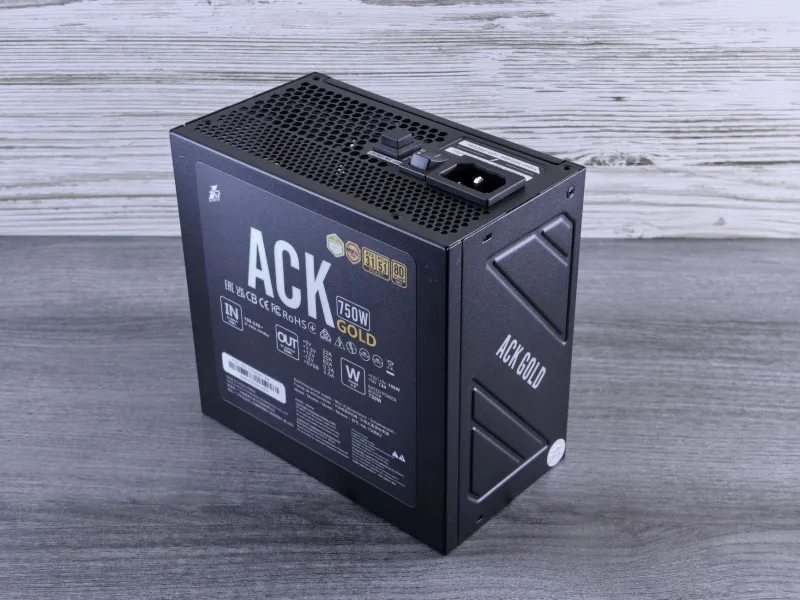
Power supplies are the one component most enthusiasts buy by badge count. Gold, Platinum, ATX 3.1, PCIe 5.0 — the labels stack up on the retail box like certifications on a mattress. Some of those labels describe measurable, meaningful engineering. Others are marketing veneer over a commodity transformer. This guide sorts the signal from the sticker.
80 Plus: A Temperature-Dependent Promise
The 80 Plus program certifies efficiency at specific load points — 20, 50, and 100 percent — measured at 115 V on the US grid. Gold means roughly 90 percent efficiency at 50% load at 115 V; Platinum and Titanium tighten the margin by single-digit percentages.
Two caveats deserve emphasis. First, the certification is measured at ambient test conditions that do not always match the 40 °C+ interior of a loaded gaming case; some manufacturers submit units tested cooler than they operate. Second, the difference between Gold and Platinum on a typical US electric bill is a few dollars a year. Efficiency tiers matter most as a proxy for build quality — higher-tier units usually use better rectifiers and fan curves — not as a savings instrument.
ATX 3.x and the Transient Problem
The more consequential label is ATX 3.0 and its revision, ATX 3.1. These Intel-published standards exist largely because of one behavior: GPU transient spikes. Modern graphics cards can draw excursions well above their rated average power for microseconds. A card rated at 320 W might spike past 500 W for a millisecond, and a PSU designed to trip on overcurrent at 110% will shut down mid-benchmark — the classic random-reboot complaint on high-end NVIDIA and AMD launches.
ATX 3.x units are specified to tolerate excursions up to 200% of rated power for short durations without tripping protection. The 12VHPWR connector (16-pin, delivering up to 600 W to the GPU) defined ATX 3.0; ATX 3.1 revised the connector to the more robust 12V-2x6 after early melting incidents with poorly seated cables. When buying for a modern high-end GPU, ATX 3.1 compliance on the label is worth more than an efficiency tier bump. It is the difference between a unit engineered for spikes and one engineered for a spec sheet from 2015.
The Cheat Sheet
Weight heavily:
- ATX 3.1 compliance — transient tolerance and native 12V-2x6 support for modern GPUs.
- Wattage headroom — size the unit so your sustained system draw sits at 50-60% of capacity, where efficiency and fan noise both peak favorably.
- Protection circuit listings — OCP, OVP, UVP, SCP, OTP. Presence is table stakes; absence is disqualifying.
- Warranty length — ten-year coverage correlates strongly with internal component grade better than any efficiency badge.
Weight lightly or ignore:
- Efficiency tier above Gold — real but financially trivial at US residential rates.
- "Japanese capacitors" as a standalone claim — true and good, but routinely printed on mediocre units to offset other compromises.
- Modularity — a cable-management preference, not a performance characteristic.
- RGB fans and sleeved-cable marketing — zero correlation with electrical behavior.
- Peak wattage figures in fine print — "850 W peak" with a 750 W continuous rating is a downgrade dressed as an upgrade.
One Habit Worth Building
Before checkout, look up the unit on a load-dependent review — not a box-spec roundup. Ripple suppression at full load and transient response tell you more about a PSU than every label combined. The badge tells you what the manufacturer paid to certify; the oscilloscope trace tells you what ships in the box.