The Error-Correcting Divide: An Argument for Bringing ECC Home
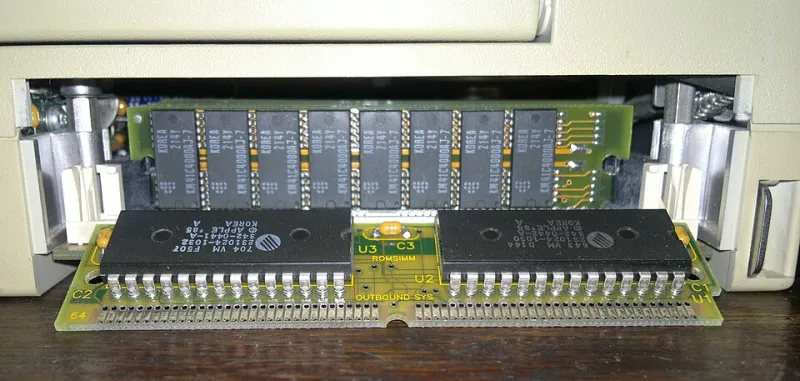
Photo: Chaosdruid, CC BY-SA 3.0, via Wikimedia Commons
There is a line drawn through the PC market that almost nobody discusses at retail: the line between memory that corrects its own errors and memory that does not. On one side sit workstations and servers, where ECC is assumed. On the other side sits your desktop, where it has been deliberately withheld for the better part of two decades.
This is an opinion piece, so let the position be stated plainly: the exclusion of ECC from consumer platforms is no longer defensible, and the rise of home AI experimentation and homelab culture has made the cost of that exclusion concrete.
The Technical Excuse Died Years Ago
The old arguments against consumer ECC — cost, complexity, incompatibility with high frequencies — have quietly evaporated. DDR4 and DDR5 ECC UDIMMs exist at reasonable prices. AMD's mainstream platforms have supported unbuffered ECC for years on the right board; a prudent buyer with a ProArt or ASRock board and a Ryzen 7000 chip can run corrected memory today, though you would never learn this from the marketing.
Intel's consumer chipsets, by contrast, have been locked down more thoroughly, with ECC reserved for W-series and Xeon SKUs — a segmentation that maps suspiciously well onto margin, not engineering. The silicon frequently does not care. The product plan does.
Why Enthusiasts Should Care Now
The classic case for ECC was the file server: a bit flip in a ZFS parity stripe is a corruption event, and home NAS builders have long understood that uncorrected memory errors are the enemy of data integrity. But the calculus has shifted.
First, memory density. A desktop with 128 GB of DDR5 carries vastly more silicon in the error-vulnerable state than the 16 GB machines of a decade ago. Error rates scale with capacity and with the electrical stress of high-frequency operation — and DDR5's aggressive signaling makes soft errors more probable, not less.
Second, the AI hobbyist workload. A home machine fine-tuning a small language model or running inference for days at a time is doing exactly the kind of long-duration, memory-intensive computation where a single undetected bit flip can silently poison a model checkpoint or a vector database. The hobbyist replicating a research paper does not have a datacenter's redundancy to catch the corruption. ECC would.
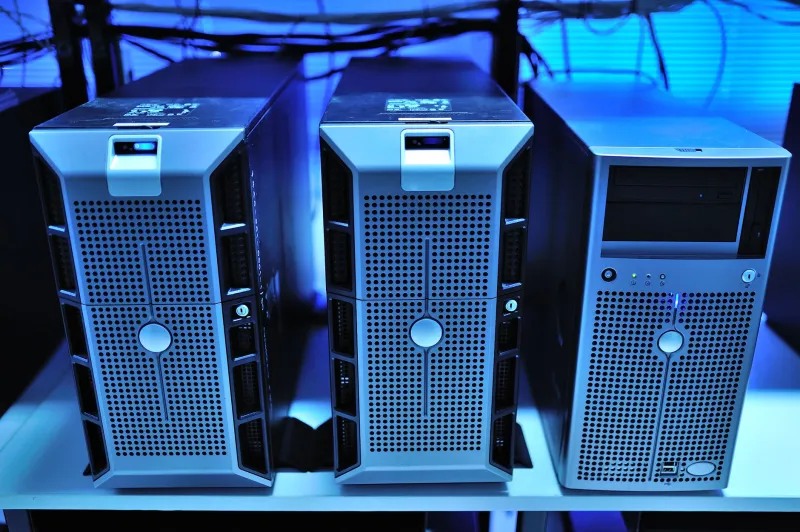
Third, the homelab itself. The American homelab community — r/homelab and its kin — has grown from a niche into a genuine cultural force, filling garages and closets with retired ThinkStations and Optiplexes precisely because those machines offer ECC on the used market. Enthusiasts are voting with their wallets for platforms the industry refuses to sell them new.
The Boards That Break the Rules
The interesting wrinkle is how many consumer platforms would support ECC if buyers knew to ask. On the AMD side, unbuffered ECC functions on numerous B650 and X670 boards, provided the vendor hasn't disabled it in firmware and the user accepts the loss of some memory overclocking headroom. It is a quiet capability, undocumented in most spec sheets, discoverable only through forum posts and validated-memory-list archaeology.
Intel's situation is starker: ECC on consumer chipsets is disabled at the platform level regardless of what the memory or the board could handle. The capability exists in the memory controllers; the product segmentation forbids its use.
For buyers, the practical guidance is this: if data integrity matters to your build — and if you are running long compute jobs, hosting family photos on ZFS, or doing anything with model training, it should — then platform ECC support belongs on your checklist alongside PCIe lanes and VRM quality. AMD's mainstream ecosystem is currently the only place a new desktop build can get there without workstation pricing.
The Case for Change
Vendors will say the market has not asked for ECC. That is true in the narrow sense that most buyers do not know it exists. It is false in the sense that matters: the market has been asking, loudly, through its homelabs and its used workstations, for a decade.
The right resolution is simple. Unbuffered ECC should be a supported, documented option on all mainstream desktop platforms — not a hidden easter egg on select boards, not a feature held hostage to workstation SKUs. The technology is built, paid for, and shipping in the silicon. The only thing missing is the will to let enthusiasts use it.