Approved by Whom? Reading a Motherboard Memory QVL Like a Skeptic
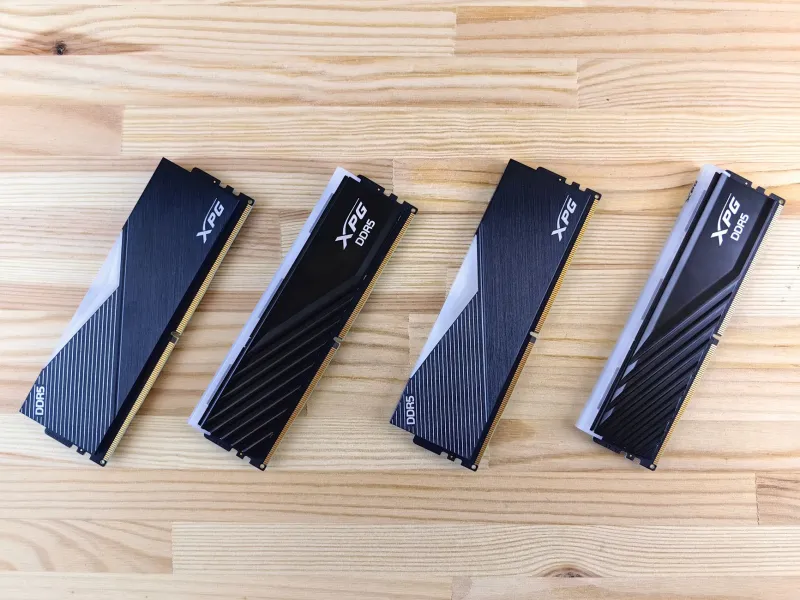
The qualified vendor list is the most over-read document in PC building. Buyers treat it as a permission slip: if the kit appears on the list, buy it; if it does not, walk away. Motherboard makers are content to let that impression stand, because a short list of approved modules is easier to support than an open-ended promise about every DIMM ever manufactured.
The reality is narrower, and more useful once you understand it. A QVL entry records that a specific module, on a specific board revision, with a specific firmware build and a specific processor, completed a specific test. Nothing more.
The fine print behind the checkmark
Validation labs do not sweep the market. A board is fitted with a sample of modules, booted at default JEDEC settings, then retested with the overclocking profile enabled — XMP on Intel boards, EXPO or XMP on AM5. A stress pass follows: an overnight MemTest86 run at best, a few hours of an in-house utility at worst. Some entries note how many DIMM slots were populated; many do not. Almost none record ambient temperature, and very few test a four-DIMM population at the kit's rated speed, because on most current platforms that configuration will not reach it anyway.
Read a checkmark, then, as a single data point gathered under conditions the vendor chose to publish selectively.
Why a missing kit usually still works
DDR5 modules are far less diverse than the part numbers suggest. A handful of DRAM manufacturers supply the dies, a smaller group of module houses assemble them, and the SPD hub and power management IC come from an even shorter list of suppliers. A 32 GB dual-rank DDR5-6000 kit from a brand absent from the list is frequently the same silicon as a kit that is on it. What varies is the SPD programming, the heat spreader, the warranty, and the price.
Platform firmware does the rest. Memory training on AM5 and on LGA1700 and LGA1851 boards runs at every cold boot, negotiating timings and voltages against the modules actually installed. A kit does not need to be known by name if it trains cleanly and holds stability.
The revision trap nobody prints
Here is where the list is weakest. Module makers swap DRAM dies under an unchanged part number when supply or pricing shifts. The sticker is identical; the silicon underneath is not, and neither is its tolerance for tight timings. A QVL entry created in 2024 may describe a build of that kit which no longer exists on shelves in 2026.
Board makers face the mirror image of the problem. PCB revisions, component substitutions, and firmware updates change what a board can train. An entry validated on the first production run does not always describe the board that shipped eighteen months later.
The list moves after launch
QVLs are living documents, amended with each firmware release. Kits are added as validation catches up and removed when they are discontinued, superseded, or found wanting under longer testing. A removal is not a recall notice, and an addition is not a breakthrough — often it simply means the lab got around to testing a kit that had been on the market for a year.
If you want to know whether a kit was ever listed, archived copies of the vendor page are frequently more informative than the live one. Watching an entry appear and disappear across firmware releases tells you more about validation priorities than any single snapshot can.
Reading an entry in under a minute
Four columns carry most of the information. The part number tells you precisely which kit was tested — match it exactly, including suffixes. Rank and capacity tell you the electrical load; two dual-rank DIMMs ask considerably more of the memory controller than two single-rank sticks. Rated speed alongside the profile column tells you whether the entry refers to JEDEC defaults or the overclocking profile. And the population column, when present, tells you whether the result applies to two slots or four.
Ignore that last column and you can find yourself running a validated kit in a configuration that was never validated at all.
A buying procedure that respects the list
Start with platform limits rather than the QVL. On a two-slot board, a two-DIMM kit at the board's rated ceiling is the low-risk choice. On a four-slot board, two sticks remain preferable to four for anything above JEDEC speeds, regardless of what the list says about capacity. Check rank before capacity; a 64 GB dual-rank pair is a heavier load than a 32 GB single-rank pair.
Buy from a retailer with a genuine return window, then verify. Run JEDEC first, confirm stability, enable the profile, and test again — overnight, not for twenty minutes. Keep firmware current; memory compatibility fixes are among the most frequent items in motherboard BIOS changelogs, which is itself an admission that the launch-day list was incomplete.
Use the QVL as a tiebreaker, not a gate.
When the list genuinely earns its keep
There are builds where validation outweighs price sensitivity. Workstations using ECC registered memory, four-DIMM configurations at high capacity, machines sold with a support contract, and any system where an unbootable DIMM costs more than the premium on an approved kit all justify paying for the checkmark. Systems integrators who ship hundreds of identical boxes have the same incentive.
For a gaming desktop with two sticks and a return window, that premium rarely buys anything you cannot verify yourself in a single evening.
The short version
The QVL is a snapshot of what one lab tested on one day. It is worth reading carefully, worth consulting when a build is unusual or expensive, and worth ignoring when it becomes an excuse to pay forty dollars more for the same memory. Buy for the platform, test for yourself, and treat the list as evidence rather than law.