Changelog Archaeology: What a Decade of 'Improved CPU Compatibility' Actually Means
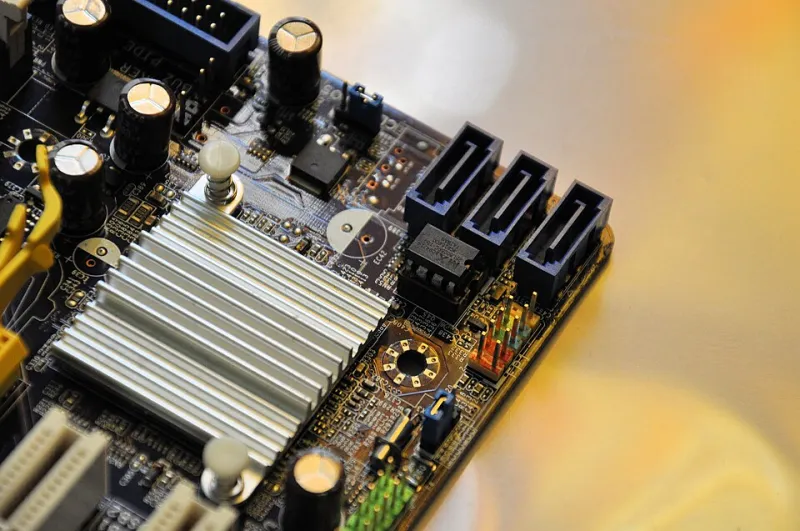
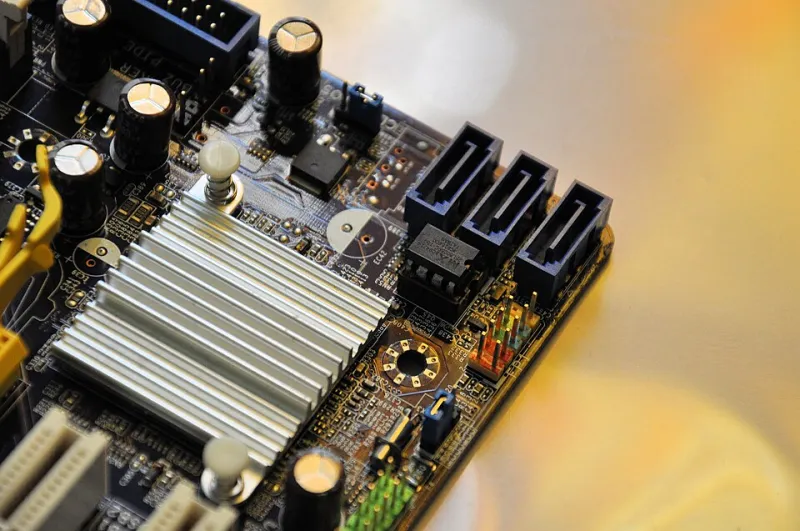
Photo: Dilshan Jayakody from Maharagama, Sri Lanka, CC BY-SA 2.0, via Wikimedia Commons
Pick any mid-range motherboard that has been on the market for a few years and pull up its support page. Scroll past the drivers, past the manuals, and open the BIOS download list. You will find a sequence of entries — version numbers, dates, and terse descriptions. "Improved CPU compatibility." "Updated CPU microcode." "Fixed system stability issue under specific CPU loading."
To a casual reader, these are noise. To anyone who has spent time around processor errata sheets, they are a confession. Each line marks the moment a real defect in real silicon — or a real gap between the board and a new processor family — became bad enough that somebody had to ship firmware to paper over it.
The Errata Sheet Nobody Reads
Processor vendors publish errata documents, and they are remarkably honest, if you can decode them. Intel's specification updates and AMD's revision guides enumerate dozens of defects per product generation: a prefetcher that misbehaves under a particular memory access pattern, a power management state that fails to wake correctly, a register that returns stale data after a specific sequence of instructions. Most are trivial. Some are not.
The public errata list, however, never tells you which fixes ship when, or whether a fix is even possible. That information lives in microcode — the patch layer loaded from the motherboard's firmware into the CPU at every boot. When a processor defect is fixable at the microcode level, the delivery mechanism is almost always a BIOS update. The motherboard vendor's changelog is therefore the only public record of when errata were actually addressed.
The trouble is that nobody writes it down plainly. Legal caution, vendor relationships, and sheer indifference conspire to produce the vaguest possible language. "Improved CPU compatibility" could mean support for a new processor stepping, a microcode revision that patches a speculative execution weakness, or a workaround for a memory controller that fails to train at certain speeds. The changelog will not say which.
Reconstructing the Timeline
Despite the vagueness, a patient reader can reconstruct a great deal. Consider a plausible timeline for a single board launched alongside a new CPU socket generation.
The initial BIOS supports launch processors only. Then a new CPU family arrives on the same socket, and the first "CPU compatibility" update appears — this is the board vendor adding support for processors that did not exist when the board was designed. Sometimes the new chips work on old firmware; often they hang during POST or misreport their frequency without the update.
Six months later, another entry: "Updated CPU microcode." Cross-reference the date with the processor vendor's public advisories and a pattern emerges. Microcode updates cluster around security disclosures — the Spectre-class remediations of recent years produced a wave of such entries across every vendor's catalog. Each one traded a small performance cost for a fix to a flaw in the silicon itself.
Then comes the entry that says the system "won't boot with certain memory configurations" or exhibits "stability issues under load." These are frequently the fingerprints of memory controller errata or power delivery corner cases — defects serious enough that early adopters on forums were RMA-ing boards and processors in frustration before the fix arrived.
Steppings, Revisions, and the Quiet Redesign
Not every bug is fixed in firmware. When a defect is severe, the silicon vendor respins the die — a new "stepping" in Intel's vocabulary, a new "revision" in AMD's. The old and new chips are sold under the same name, distinguished only by a code printed on the heat spreader.
The motherboard sits at the intersection of these populations. Firmware must handle both steppings, applying microcode workarounds only where needed. Some BIOS updates exist solely to detect a new stepping and load different patch data for it. If you bought the early, buggy silicon, your board spends a few extra microseconds at every boot applying workarounds that later silicon does not need. You will never be told this. The changelog certainly will not say it.
Why This Matters to Buyers
There is a practical lesson here. When a board's BIOS list is long and dense with microcode updates, it does not signal an unreliable product — it signals an actively maintained one, serving a socket that lived through a full generation of silicon revisions and security remediation. Conversely, a board whose firmware list stops two years before the socket's retirement is a board whose owners were left holding unpatched processors.
Before buying, it is worth reading the changelog the way an archaeologist reads strata. The dates tell you when the vendor gave up. The vague entries tell you where the bodies are buried. And the very first entry — the launch firmware — tells you that whatever bugs shipped in that first production run of silicon, somebody, somewhere, spent the following years quietly fixing them in the only place they could: your motherboard's flash chip.