Pretending It's 1981: The Boot Sector Ritual Every Modern PC Still Performs
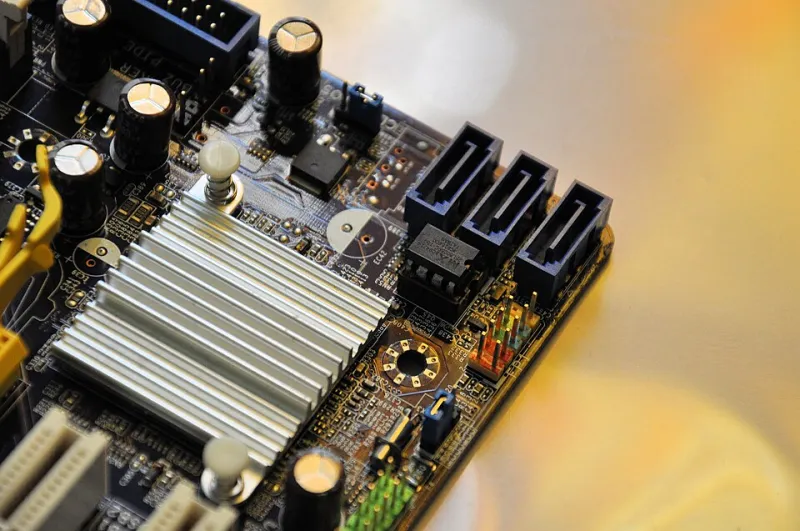
Photo: Dilshan Jayakody from Maharagama, Sri Lanka, CC BY-SA 2.0, via Wikimedia Commons
Somewhere between the third and fourth second of your machine's power-on sequence, your brand-new system — NVMe storage, 64-bit multi-core processor, UEFI 2.10 firmware — is prepared to do something remarkable: it can pretend, convincingly, to be a 1981 IBM Personal Computer. Not metaphorically. The firmware can field 16-bit interrupts, serve BIOS interrupt 0x13 disk calls, and hand a 512-byte boot sector a processor in real mode with exactly 1,024 bytes of stack. This is not an accident. It is one of the longest-running backward compatibility commitments in the history of computing, and it raises an uncomfortable question about what we're paying for it.
The Address Nobody Chose
Consider 0x7C00. Every PC boot sector in existence is loaded to this address, and every firmware today honors it. The number looks arbitrary because it is. In the original IBM PC's 32 KiB RAM configuration, 0x7C00 was the highest address that left 512 bytes for the sector plus stack and data space below it — a decision made for a machine with less memory than a single modern CPU register file. The address has since been carved into a billion firmware images, and no amount of architectural progress has dislodged it. The CSM on your motherboard is, in a real sense, still reserving a seat for a machine with 32 kilobytes of memory.
What the Compatibility Module Actually Does
The Compatibility Support Module — CSM in firmware menus — is a UEFI feature whose entire job is nostalgia. It provides:
- Real mode interrupt services, so DOS-era loaders and older operating systems can talk to disks and displays through INT 10h and INT 13h.
- A 16-bit entry point, because a 1981 processor had no other mode to offer.
- Legacy Option ROM execution, letting add-in cards ship their own 16-bit initialization code written against assumptions four decades old.
The last item deserves particular attention. Legacy option ROMs must execute in real mode, which means the firmware must briefly reshape the machine into something a 1981 programmer would recognize, run the card's code, then restore order. On systems that still ship CSM support, this is one of the reasons pre-boot times vary so wildly between otherwise similar boards.
The Performance Ledger
It's tempting to assume all of this is free — a few kilobytes of firmware code idling in flash. Mostly, that's true. But the costs are not zero, and they cluster in predictable places.
The boot path itself is the visible one. A system configured for legacy boot must perform the full 16-bit dance: real mode entry, sector-by-sector loading, no driver model, no parallel initialization. UEFI native boot, by contrast, can initialize devices concurrently and hand off a machine that's already in 64-bit mode with a memory map the OS can actually parse. The difference on a modern NVMe drive is measured in seconds, not milliseconds — noticeable on every restart.
The subtler cost is in option ROM handling. Cards with legacy ROMs force the firmware through mode switches that pure-UEFI devices never trigger. This is why the industry has been methodically retiring the mechanism: NVIDIA and AMD stopped shipping legacy video ROMs years ago, and motherboard vendors now ship boards with the CSM omitted entirely. Once the last legacy option ROM consumer disappears, the module has nothing left to be compatible with.
Feature or Fossil?
There is a genuine argument for the fossil interpretation. Nobody boots DOS on a 13th-generation desktop for production work. The CSM exists today largely to support a shrinking tail of niche use cases: obscure OS/2 installs, certain embedded controllers, and the occasional forensic imaging tool that still expects INT 13h. Each passing firmware generation serves a smaller population.
But the feature interpretation has merit too, and it's not purely sentimental. The x86 platform's defining competitive trait has always been that software written forty years ago still runs. That promise — the one AMD leaned on when K8 made AMD64 the de facto standard — is only credible if the oldest entry points survive. A boot path that refuses to die is the visible tip of a compatibility philosophy that makes the platform worth buying. Break it, and the platform becomes just another architecture with a migration problem.
What Comes Next
The trajectory is clear. UEFI Class 3 systems — firmware with no CSM at all — are now standard on consumer boards from every major vendor. The 0x7C00 address survives only inside the Secure Boot-signed bootloaders that translate it away. Within a few years, the 1981 emulation layer will exist nowhere except in virtual machines, where it will be emulated by software running on machines that never had it in firmware at all.
That is, arguably, the correct ending: compatibility preserved as a simulation rather than a tax. The physical machine boots faster, the firmware is smaller, and the fossil remains available to anyone who wants to visit it. The 3.5mm jack analogy holds one final way — the jack eventually left the phone, and the adapter appeared. The PC's adapter, in this case, is a hypervisor flag.