Before the Branding War: The Quiet Battle Over Who Got to Put 64 on a Processor
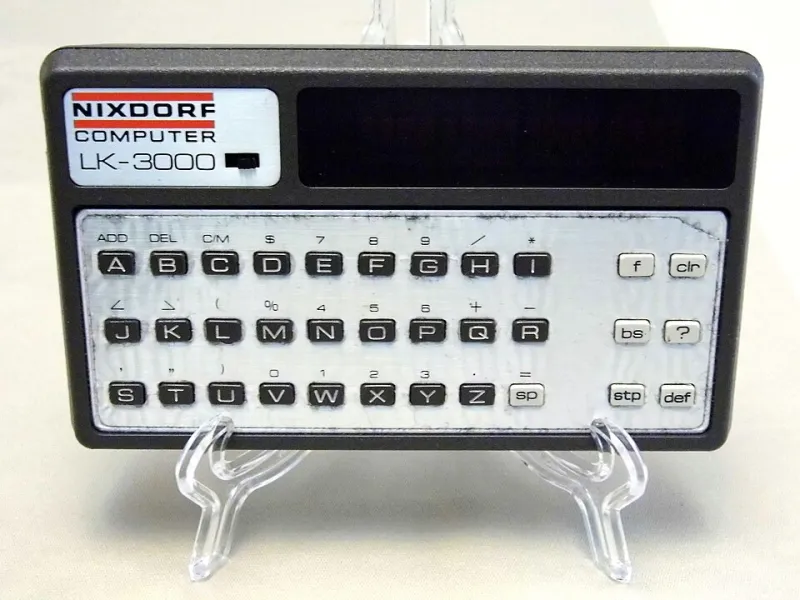
Photo: Joe Haupt from USA, CC BY-SA 2.0, via Wikimedia Commons
For a site named after a two-digit number, it is worth acknowledging an uncomfortable truth: nobody owns the number 64. That fact seems self-evident now, when 64-bit addressing is so universal that most consumers never think about it. But two decades ago, the question of who could legitimately attach "64" to a processor name was contested in federal courtrooms, resolved in trademark filings, and — in at least one case — settled by a marketing department deciding that the safest option was to say nothing at all.
The First Land Grab
Long before desktop chips went 64-bit, the number was already valuable real estate. MIPS, Sun, DEC, and SGI all shipped 64-bit architectures through the 1990s, and each treated the numeral as a badge of engineering maturity. DEC's Alpha 21164, Sun's UltraSPARC — the "64" signaled that a machine had crossed a threshold that mattered to scientific and enterprise buyers.
What changed with x86 was that 64-bit computing stopped being an enterprise curiosity and became a consumer marketing question. And that transition happened on AMD's terms, not Intel's.
AMD64: A Name Built on a Lawsuit
AMD's 64-bit extension of x86 — the instruction set nearly every desktop processor runs today — was born out of necessity. When Intel's Itanium proved incompatible with existing software, AMD extended the x86 architecture itself, first as "x86-64" and later under the trademarked name AMD64.
The branding was deliberately defensive. AMD had already won a protracted legal fight with Intel over the right to produce x86-compatible processors, a dispute stretching back to a 1982 cross-licensing agreement and litigated through the late 1980s and 1990s. When the Opteron and Athlon 64 arrived in 2003, the name AMD64 was a statement of authorship: this architecture belonged to the underdog, and the trademark made that claim legally durable.
The Athlon 64's name deserves particular attention. It was among the first times a consumer processor put its bit-width directly in the product name, on the retail box, at a price a home builder could pay. The message to American enthusiasts was blunt: your next PC should be 64-bit, and only AMD can take you there.
Intel's Answer Was Silence
Intel's response to AMD64 remains one of the strangest chapters in processor marketing. Rather than adopt the competitor's architecture name — even though Intel was, in practice, licensing AMD's extension — Intel refused to use the term AMD64 in any official capacity. The company referred to its implementation as "Intel 64" only after years of calling it EM64T, or Extended Memory 64 Technology.
The reluctance was not merely corporate stubbornness. Intel had explored its own 64-bit desktop x86 designs and, according to widely reported internal debates, had publicly committed to Itanium as the future in a way that made an about-face politically expensive. Acknowledging 64-bit x86 meant admitting the Itanium roadmap was a miscalculation. The name EM64T was a hedge: technically accurate, deliberately unmemorable, and pointedly free of AMD's name.
What If the Pentium Had Said 64?
The most intriguing footnote is the road not taken. Internal naming discussions at Intel during this era reportedly weighed putting 64-bit branding directly into mainstream Pentium product names, in the same way the Pentium 4 had put its generation on the label. The idea was shelved. A Pentium 64 would have implicitly conceded that AMD's architecture was the industry standard — and it would have created an awkward collision with the Itanium brand, which Intel had positioned as the true 64-bit future.
So Intel shipped chips that were 64-bit in every functional sense while refusing to put the numeral on the box. Consumers bought Pentium 4s with EM64T and never knew what they were buying. The number was in the silicon but not in the marketing.
Why the Fight Still Matters
The naming battles of the early 2000s established patterns that persist. AMD64 remains the canonical name for the instruction set — visible in Linux distribution repositories, compiler flags, and Windows driver downloads — a rare case where a competitor's trademark became the de facto industry vocabulary. Intel's resistance to competitor terminology, meanwhile, has resurfaced repeatedly, from the x86-S debates to branding around heterogeneous core designs.
There is also a lesson about numbers as intellectual property. A bit-width cannot be trademarked, but a compound brand can, and AMD proved that owning the phrase attached to a number can outlast owning the market position. Two decades later, software installers still ask whether you want the amd64 build, on machines Intel designed, manufactured, and sold.
For a reference site that took its name from that numeral, the history is a useful reminder: the numbers on a processor box are not just specifications. They are the residue of legal strategy, marketing anxiety, and corporate pride — compressed into two digits that most buyers never think to question.