Powers of Two and the Persistence of 64: A Number That Refused to Retire
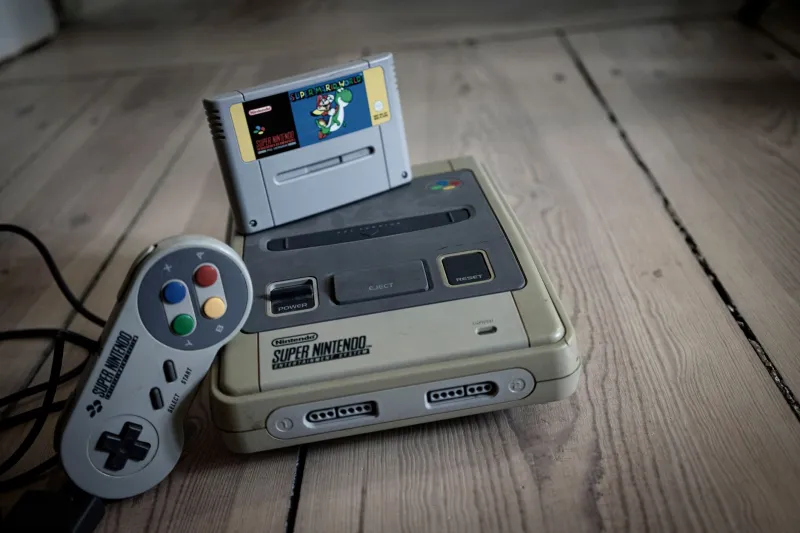
Every era of computing has a number attached to it. The 8-bit machines of the late 1970s gave way to 16-bit home computers, then the 32-bit revolution of the 1990s, and each transition arrived with marketing budgets to match. Yet when the dust settled, one figure proved far stickier than anyone in 1996 could have predicted: 64.
Consider the survivors. The Nintendo 64 launched that year with a name that still reads as futuristic to a certain generation of American gamers. AMD shipped the first consumer x86-64 processor in 2003, and the ISA extension it introduced remains the foundation of every desktop chip sold at Micro Center today. Cache designers settled on 64-byte lines decades ago and have shown no appetite for change. AVX-512 doubled vector width to 64 bytes. Even camera marketing borrowed it — 64-megapixel sensors became the midrange smartphone standard.
Numbers like 286, 486, and even 128 (remember the Sega Dreamcast's 128-bit marketing, or Intel's doomed Itanium pitch?) did not age nearly as well.
Why 64 Stuck
The durability of 64 is not an accident of branding. It sits at a genuine engineering sweet spot, and each of its uses reinforces the others.
The address-space argument is the obvious one. Sixty-four bits of virtual addressing yields 16 exabytes — a ceiling so absurd that current x86-64 implementations actually use only 48 or 57 bits of it. Unlike the 32-bit barrier, which became a real constraint around 2004 as desktop machines crossed 4 GB of RAM, nobody will exhaust 64-bit addressing within the lifetime of anyone reading this site.
But the deeper story is the convergence of unrelated design decisions on the same integer:
- Cache lines: 64 bytes balances prefetch granularity against coherence traffic. It has survived DRAM generations, SDRAM to DDR5, without serious challenge.
- SIMD width: Eight 64-bit doubles or sixteen 32-bit floats fit in a 512-bit register — 64 bytes again. The alignment between vector width and cache line size is not coincidental; it makes loads and stores line up naturally.
- Instruction encoding: x86-64's REX prefixes and later VEX/EVEX encodings were built around register files whose sizes scale in the same powers of two.
When the cache hierarchy, the vector units, and the address space all agree on a number, the ecosystem locks in. Compilers, operating systems, and debug tooling assume it. Retraining that many engineers and rewriting that much software carries a cost no marginal gain has yet justified.
The Numbers That Didn't Survive
It is worth remembering how many competitors 64 outlasted. The 1990s were full of 128-bit claims, most of them marketing constructs — the Dreamcast's SH-4 could move 128 bits per instruction, but that said little about general-purpose width. Intel's Itanium was positioned as the true 64-bit future, and its commercial failure is the clearest evidence that the number mattered less than compatibility. AMD won the 64-bit era not by inventing 64-bit computing — DEC, MIPS, and SPARC had it years earlier — but by attaching it to an ISA the industry already knew.
What Comes After 64?
If history is a guide, the next power of two will not arrive as a marketing banner but as a quiet infrastructure shift. The plausible candidates are unglamorous: 128-byte cache lines are already being discussed as DRAM density and prefetcher sophistication increase, and CXL-attached memory architectures may eventually pressure addressing assumptions. Vector ISAs like RISC-V's RVV sidestep fixed widths entirely, which may prove the real long-term answer — width as a runtime parameter rather than an identity.
Our bet, for what it is worth: 64 holds through at least mid-century. The number that defined the transition from Sega Genesis to GPU-accelerated everything has one property no successor can match — it is already everywhere, from the register file to the label on a midrange Android phone. The 32-bit era ended because software hit a wall. Nothing in the current roadmap suggests 64-bit computing will hit one.
For a site named after the integer in question, we admit a certain bias. But the engineering case stands on its own.