Sixty-Five Watts on Paper, Twice That at the Wall: Untangling TDP From What Your Processor Really Draws
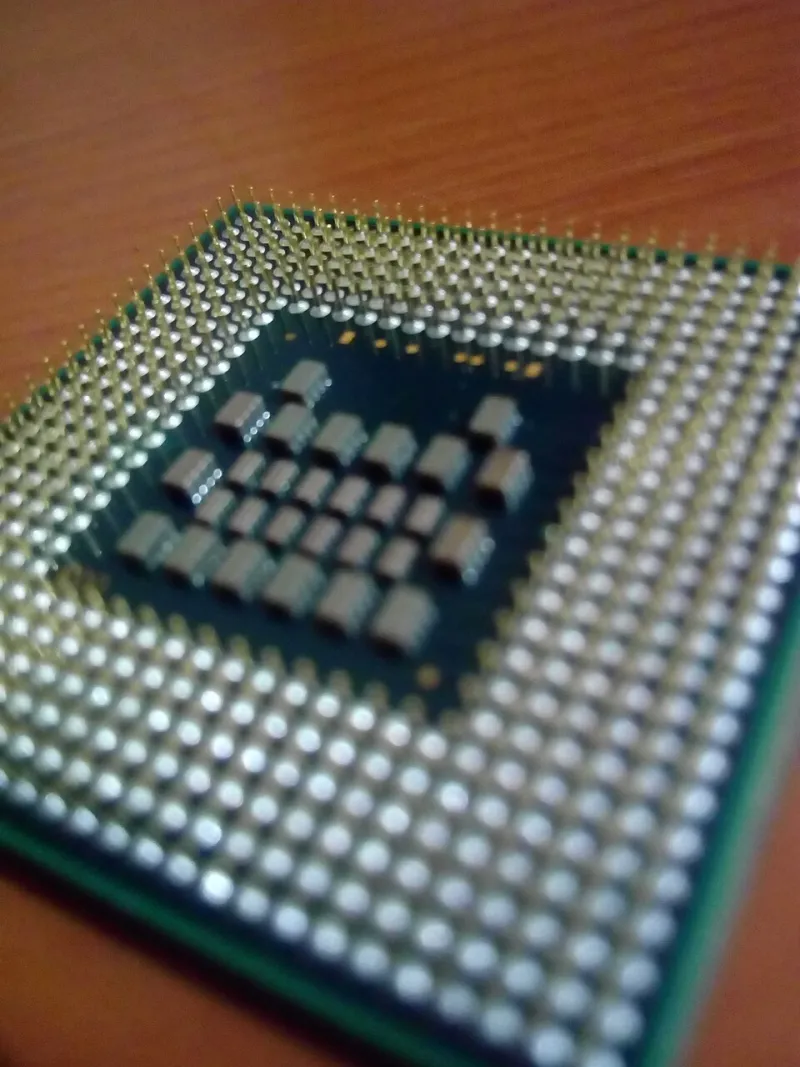
Photo: Lamproslefteris, CC BY-SA 4.0, via Wikimedia Commons
A Spec Named for Cooling, Read as Consumption
Ask a room full of PC builders what TDP means and you will get two confident, contradictory answers. Half will tell you it is how many watts a processor consumes. The other half will say it is how much heat the cooler needs to dissipate. Both groups are partly right, and the confusion is not their fault — it is baked into the acronym itself.
Thermal Design Power is, at its root, a cooling specification. It tells a system integrator how much thermal load a heatsink must be engineered to handle for the processor to maintain its rated operating condition. It was never intended to appear on retail packaging as a measure of electrical draw. The fact that it does — and that shoppers use it to estimate PSUs, compare efficiency, and pick between chips — is an accident of marketing that both major x86 vendors have been happy to exploit.
How the Number Is Actually Derived
The formal definition varies between Intel and AMD, but the underlying logic is similar in both camps. TDP is not measured at the wall, at the socket, or even at maximum turbo. It is a modeled figure, usually anchored to the power the processor dissipates at its base clock under a defined workload, at a defined ambient temperature, on a reference board.
That base-clock anchor is the crux. Base frequency is the guaranteed, all-core, indefinitely sustainable speed — the floor of the product's performance envelope, not its ceiling. A chip can idle well below its TDP and, under the right conditions, far exceed it. The number describes one operating point chosen by the vendor, not a range or an average.
AMD's documentation is refreshingly blunt about this. In the Ryzen era, the company explicitly defines a second metric, the Package Power Tracking limit or PPT, as the actual electrical ceiling the processor is permitted to draw. For most AM4 and AM5 desktop parts, PPT is set at roughly 1.35 times the labeled TDP. A Ryzen 7 7700X, sold as a 105W part, may pull up to 142W through the socket — indefinitely, if cooling permits.
Intel's Two-Tier Arrangement
Intel's approach splits the discrepancy across two separate limits. PL1, Power Level 1, is the sustained power budget — the spiritual successor to classic TDP. PL2 is a short-term turbo budget, typically much higher, allowed for a defined window (Tau) before the processor settles back to PL1.
On a conventional 65W desktop part, PL2 might be 117W or more. On unlocked K-series chips the gap widens further: a 125W-class processor can transiently draw 250W or beyond during turbo. During the Alder Lake and Raptor Lake generations, this became a genuine systems-integration issue, as flagship parts routinely stressed 240mm and even 360mm liquid coolers and pushed mainstream motherboards — with their power-delivery stages running hot — into territory their designers had not anticipated.
Why the Definition Drifted
Neither vendor set out to deceive; the incentive structure simply favored ambiguity. In the mobile market, where thin laptops compete on battery life and chassis temperature, a low TDP is a selling point. A 15W part that briefly boosts to 50W benchmarks far better than a genuinely 15W part, so the label reflects the sustainable floor while the marketing implies the peak.
On the desktop, the pressure runs the other direction. High boost clocks sell processors, and boost clocks require power. Keeping the boxed TDP anchored to base frequency lets vendors advertise aggressive turbo behavior without renumbering their cooler-compatibility charts. The result is a spec that is simultaneously true and nearly useless for the question most buyers are asking: how much electricity does this thing use, and can my cooler and case handle it?
Reading Between the Label
For the enthusiast willing to look one layer deeper, the honest numbers are available — they just live in different documents.
- AMD platforms: search the platform documentation for PPT. On AM5, the formula is straightforward, and BIOS menus expose the limit directly, where it can be tuned per-system.
- Intel platforms: look up PL1 and PL2 for the specific board and BIOS, since motherboard vendors frequently ship 'performance' profiles that raise both beyond Intel's reference values. A '125W' chip on an unlocked board may never be constrained to 125W at all.
- Independent measurements: sustained all-core power draw under a fixed workload, published by testing outlets, tells you more about real consumption than any boxed figure.
There is a secondary benefit to understanding this machinery: it unlocks the most underused performance lever in consumer computing. Power limits are configurable. A processor held to its nominal TDP often loses only a few percent of multi-threaded throughput while shedding dozens of watts of heat and noise — a trade many quiet-computing enthusiasts would take willingly.
The Number That Refuses to Die
TDP survives because it is useful to someone. Cooler manufacturers still rate against it, system integrators still design around it, and marketing departments still find it convenient. But the enthusiast community should treat it the way it treats base clocks: as a floor, a reference point, one data point in a much larger envelope.
The real specification of a modern processor is not a single wattage. It is a small family of limits — PPT, PL1, PL2, Tau, and the temperature thresholds that govern them — documented across vendor whitepapers and motherboard manuals. Decoding that family takes an afternoon. It is an afternoon well spent, because the gap between the number on the box and the current through the socket has never been wider, and it shows no sign of narrowing.