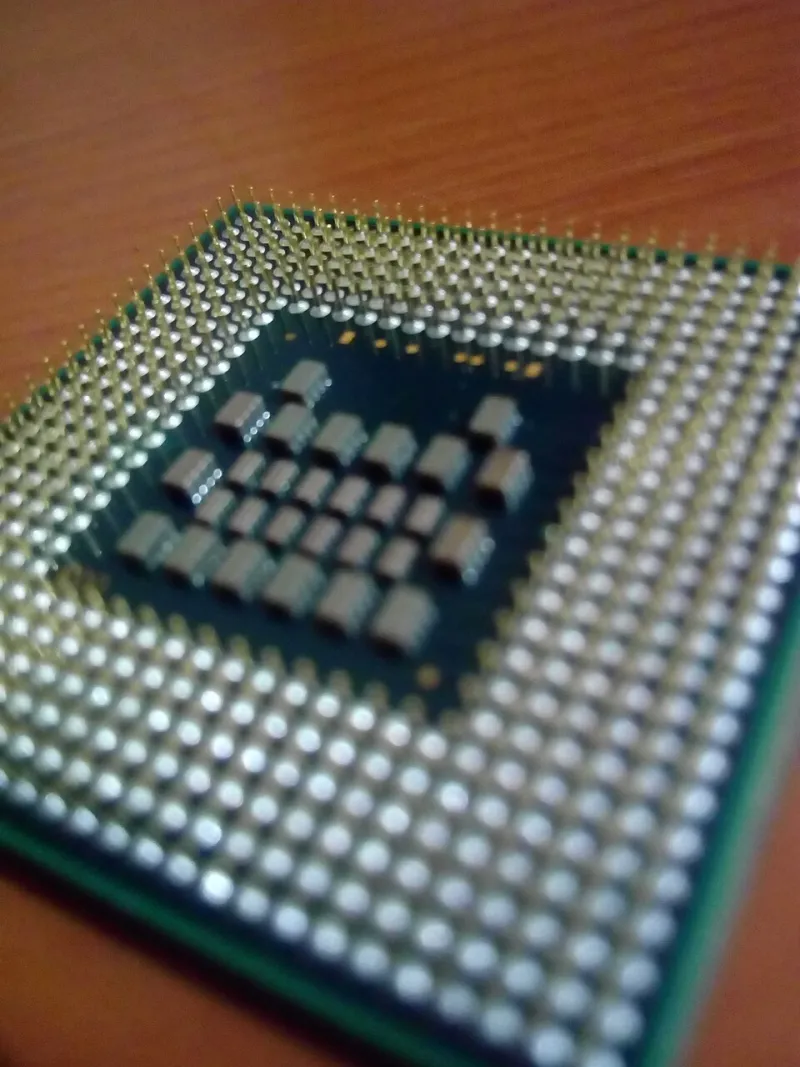
Eleven Years on the Same Pins: What AM4's Marathon Actually Cost Us
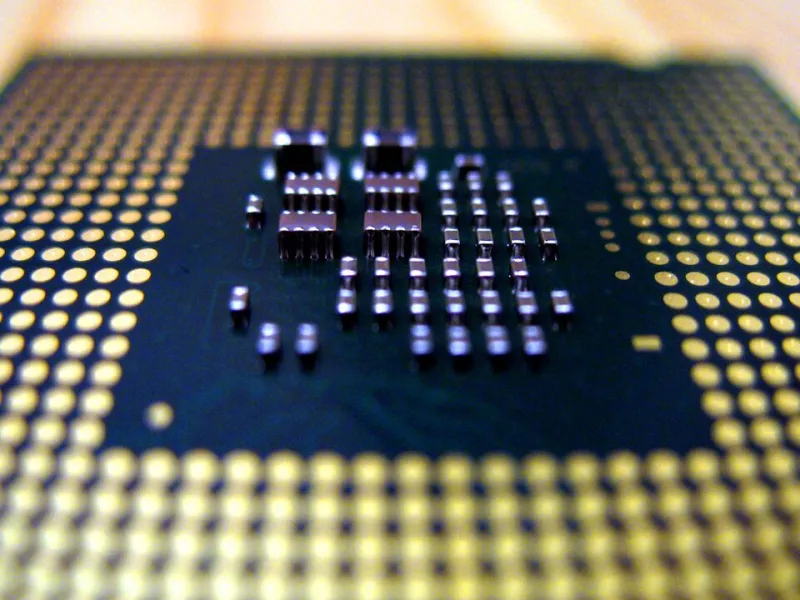
Photo: Uwe Hermann from Germany, CC BY-SA 2.0, via Wikimedia Commons
When AMD committed to supporting AM4 through multiple Zen generations, the announcement was treated as a consumer victory of historic proportion. And in many ways it was: a motherboard purchased in 2017 could, with a BIOS flash, host a processor released in 2022. No desktop platform in modern memory had offered that kind of runway.
But a eulogy is a moment for honesty as much as praise, and AM4's long retirement — it remains on shelves years after AM5's debut — invites a harder question. At what point does a socket's staying power stop being a gift and start being an anchor?
A Brief Lineage of Stubbornness
Long-lived sockets are not a new phenomenon, even if the marketing around them is. Slot A lasted barely two years. Socket A (462) soldiered on from 2000 to well past 2004, spanning the entire Athlon XP era and becoming the first platform many American builders ever touched. LGA775, Intel's workhorse from 2004 through 2011, ran seven years and covered everything from the Pentium 4's final act to the Core 2 Quad — a span so wide that early and late boards shared almost nothing but the mechanical interface.
AM3 stretched from 2009 into the Bulldozer years. LGA1150 and AM3+ each cleared half a decade. AM4, introduced in 2016 and still shipping in budget prebuilts, is the current record holder among desktop platforms, at roughly nine years and counting of retail availability.
The pattern is instructive. Sockets tend to die not when the pins run out of bandwidth, but when memory standards, I/O interfaces, or power delivery requirements force a clean break. DDR3 to DDR4 killed AM3+. PCIe generational leaps and DDR5 killed AM4, eventually, and only after considerable protest.
The Buyer's Ledger
For the consumer, longevity is genuinely valuable, and not merely abstractly. A 2017-era B350 board paired with a 5800X3D became one of the great upgrade stories of the decade — a $60 motherboard rescue turning into a top-tier gaming chip. That transaction simply has no equivalent on Intel's desktop side during the same window, where two-core-per-generation platform churn made long-horizon upgrades a gamble.
The benefits compound for people who don't upgrade annually. Most American PC owners replace motherboards rarely, if ever. A socket that survives five years means the secondary market stays liquid, BIOS support stays plausible, and a used Ryzen 5 1600 remains a rational purchase in 2021 in a way a used i7-6700K never quite was on its own terms.
Where the Win Curdles
Yet the burden is real, and it lands unevenly. Long-lived platforms accumulate compatibility debt that the buyer pays down with time rather than money.
The first cost is BIOS support itself. AM4's 500-series boards handled new chips gracefully, but early 300-series boards required BIOS updates that sometimes demanded a supported CPU already installed — the classic chicken-and-egg that USB BIOS Flashback eventually solved on some boards and never did on others. Owners of budget A320 boards in 2022 discovered their 'supported' platform required a support ticket's worth of ceremony.
The second cost is subtler: a stagnant socket discourages platform innovation. Why buy PCIe 5.0, USB4, or DDR5 if the incumbent platform keeps getting cheaper and the chips keep coming? AM4's twilight arguably slowed enthusiast adoption of newer standards, not because the standards were bad, but because the value proposition of staying put was so unusually strong.
The third cost falls on vendors and the firmware ecosystem. Every additional year of support is another year of AGESA validation, another matrix of memory compatibility, another generation of security patching for silicon that was never designed to receive it. The article on this site about post-end-of-life motherboards makes the point plainly: support is a promise that costs money forever.
The Verdict
The honest accounting is that socket longevity is a feature whose value decays with a curve, not a line. In years one through four, it's a consumer win of real substance. In years five through seven, it's a mixed blessing that rewards patience and punishes the impatient equally. Beyond that, it becomes a compatibility burden dressed in a loyalty program's clothing — useful to the buyer who never upgrades, expensive for everyone else in the ecosystem.
AM4 earned its eulogy. But the next platform to attempt a decade on the same pins should be judged not by the length of the run, but by whether each additional year was something buyers needed, or something marketing could count.